
Abdominoplasty / Tummy Tuck / Abdominal Plastic Surgery in Bangkok Thailand
Abdominoplasty, or tummy tuck, is a procedure that flattens the abdomen by removing extra fat and skin and tightening muscles in your abdominal wall. The procedure benefits those after childbirth, especially women after numerous pregnancies, and helps them get desirable body figures. With an incision along the bikini line, the surgery is performed under general anesthesia, and it takes around 3-4 hours. After the surgery, the patient must be admitted to the hospital for three nights. The surgery usually leaves a scar along the pubic hairline, possibly from the left to right side of the hips, depending on the volume of fat and excess skin.
We offer two types of Abdominoplasty / Tummy Tuck
1. Abdominoplasty / Tummy Tuck with umbilical transposition and repairing the sagging abdominal muscles
This procedure is suitable for a person with a lot of excess fat and skin or stretch marks from childbirth. This procedure must be performed under general anesthesia.
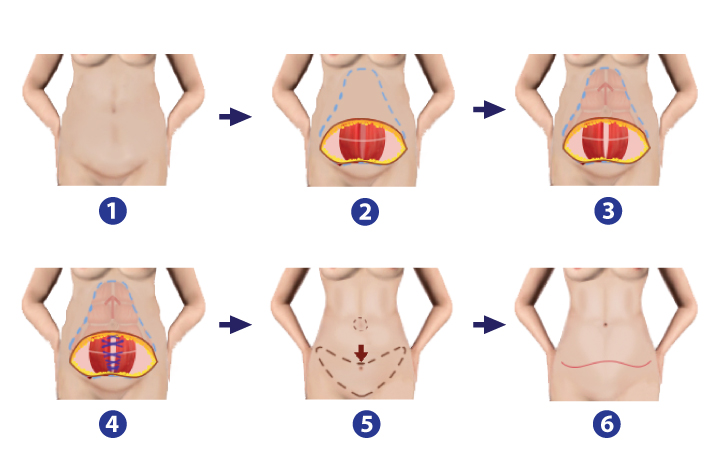
1. The surgeon will examine the muscles’ sagging for surgical planning, as shown in Figure 1.
2. The surgeon marks the incision on the bikini line and then opens the wound through the layer of the skin to the muscle, as shown in Figure 2.
3. Fibrosis between the layer of the skin and the muscle is released from the pubic to the sub-mammary area. The surgeon will then see the sagging muscles.
4. The surgeon then repairs the sagging abdominal muscles from the sub-mammary to the pubic, tightening the abdominal muscles, as shown in Figure 4.
5. The skin and fat layer is pulled down, with the excess from the former umbilical to the pubic removed. The surgeon then sutures the fat layer with the dissolvable stitches and carefully creates and retouches the new umbilical to prevent the scar, as shown in Figure 5.
6. The surgeon cuts and sutures the excess skin on the pubic area.
**The operation time is around 3-4 hours**
2. Mini Abdominal Lipectomy
This procedure is suitable for a person who has moderate excess fat but with stretch marks. This procedure aims to correct the stretch marks and can be performed under local or general anesthesia. The patient can perform by-day surgery.
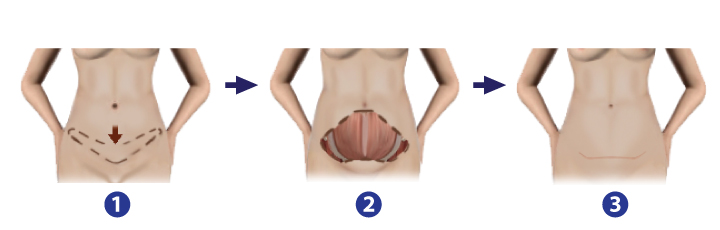
1. The surgeon will check the sagging of the muscles for surgical planning, as shown in Figure 1.
2. The surgeon opens the wound on the pubic and releases the fibrosis between the skin layer and the muscle from the pubic to the below umbilical area.
3. The layer of the skin and fat is then pulled down. The surgeon then cuts and sutures the excess
skin on the pubic area.
Preparing for Abdominoplasty / Tummy tuck
- Consult with the surgeon about your goals, lab test, and medical evaluation
- Get a lab test or a medical evaluation
- Take certain medications or adjust your current medication
- Stop smoking before and after surgery 2 weeks
- Avoid taking aspirin, anti-inflammatory drugs, and herbal supplements as they can increase bleeding
Procedure for Abdominoplasty / Tummy Tuck
- Step for Anesthesia: we offer general anesthesia.
- The surgeon marks the area for an incision at the bikini line and then opens the incision; if the patient requires the Tummy tuck to reposition the umbilical and repair the sagging muscle, the patient has to open the tissue above the abdominal muscle pass through the lower breast (submammary area), and then fix the muscle to tighten at the midline of the abdomen. Pull down the skin and cut the excess. If patients require a mini tummy tuck, the surgeon will open the incision and cut the excess skin.
- Close the incision by suture
Post-operative Care for Tummy Tuck
- During the first 2-3 days after the surgery, the patient must wear the full-length compression garment daily to tighten the muscle and reduce swelling. After one month, the patient can continue to wear it at night to support the muscle.
- The stitches will be removed six days after the surgery.
- The patient can start exercising about two months after the surgery.
- The swelling will reduce, and the wound will be healed three to four months after the surgery.
Forewarning for Post-operative Care
- Refrain from showering until two to three days after the surgery. Dress the wound according to the doctor’s recommendation.
- Wear the compression garment all the time during the first month. After one month, the patient should continue wearing it to support the muscle and prevent the wound from tearing.
- Bruises might be visible but should be gone in two to three weeks. If there is pain, swelling, or redness, please come to see the doctor immediately.
Risks and Complications for Tummy Tuck
- Bleeding
- Infection
- Fluid accumulation (seroma)
- Poor wound healing
- Skin loss
- Numbness
- Skin discoloration and prolonged swelling
- Scarring
- Anesthesia risks
- Recurrent looseness of skin
- Fat necrosis
- Deep vein thrombosis, cardiac and pulmonary complications
- Asymmetry
- Persistent pain
Recovery from Tummy Tuck
The recovery of Abdominoplasty / Tummy tuck varies depending on the surgical technique performed. Your drains will be left in for a few days after the surgery. You must take an antibiotic and an anticoagulant while your drains are in place. You need to wear an abdominal binder for about six weeks. It will help you avoid fluid buildup and support your abdomen. Mini Abdominoplasty / Mini tummy tuck usually uses a shorter period of recovery. You need to avoid strenuous activity for at least six weeks and can return to work after surgery for 2-6 weeks.
Before & After for Tummy Tuck
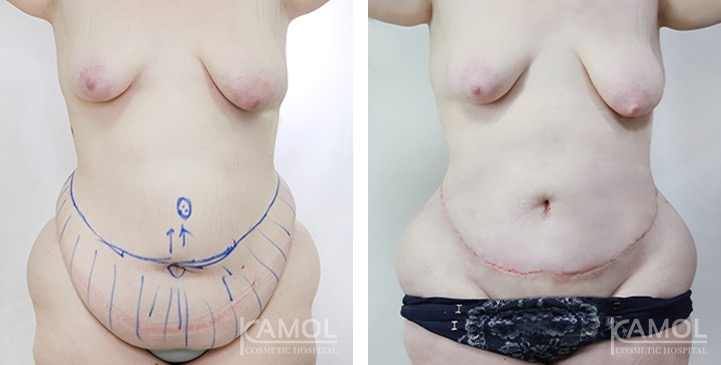
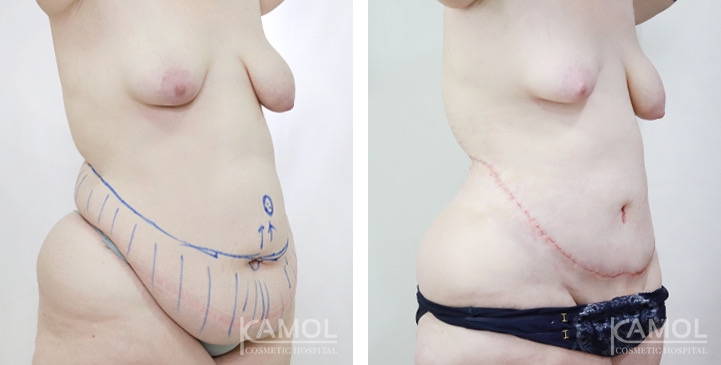
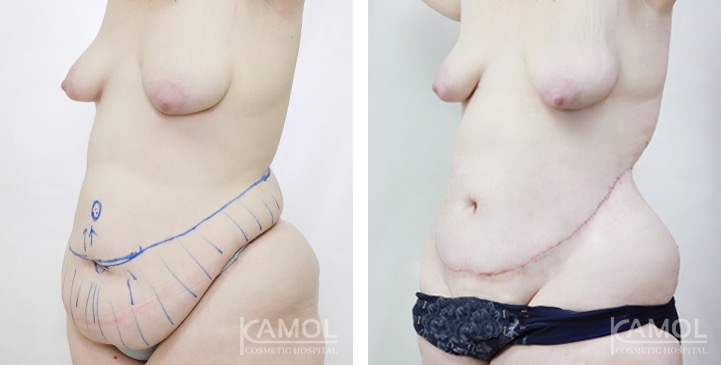
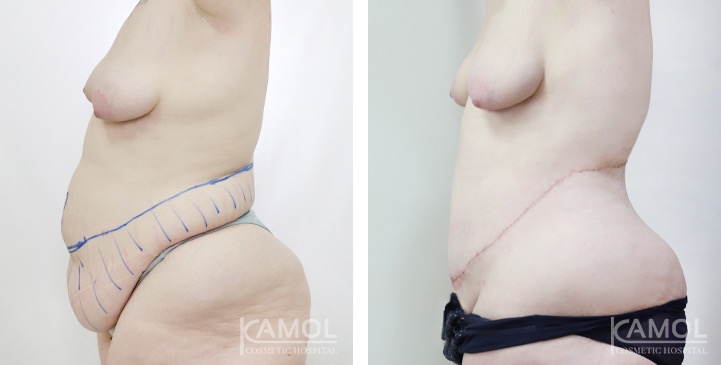
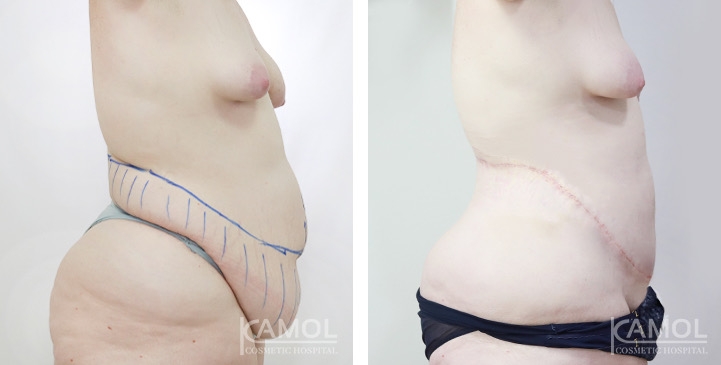
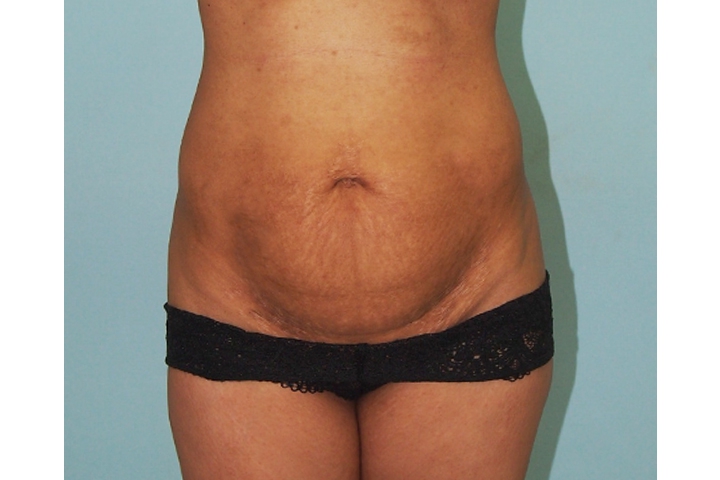
Reviews for Tummy Tuck
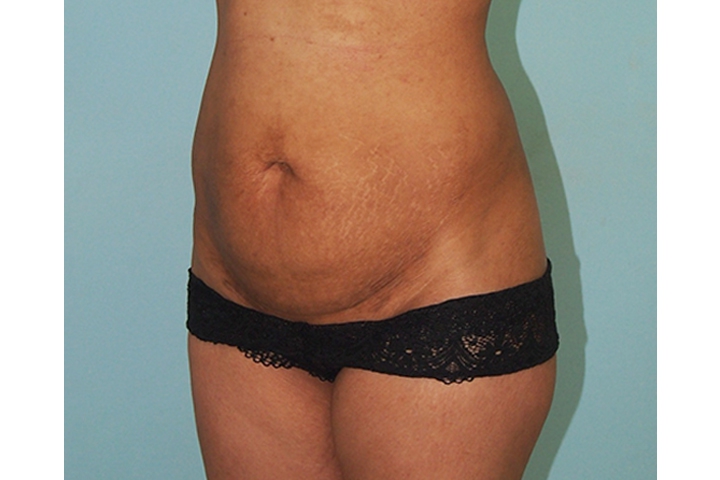
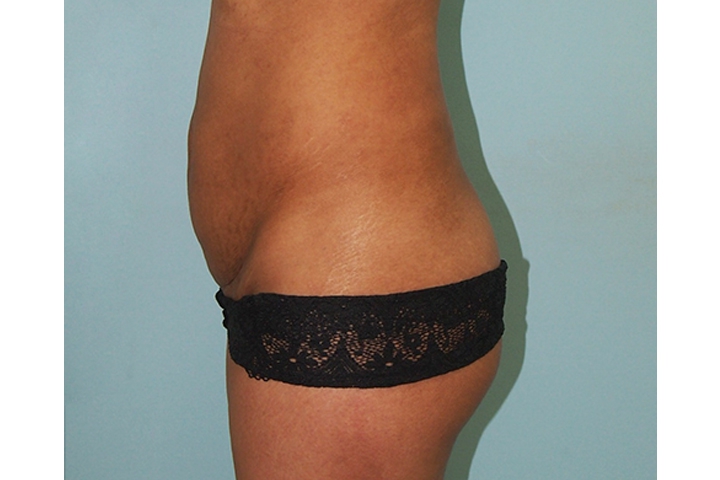
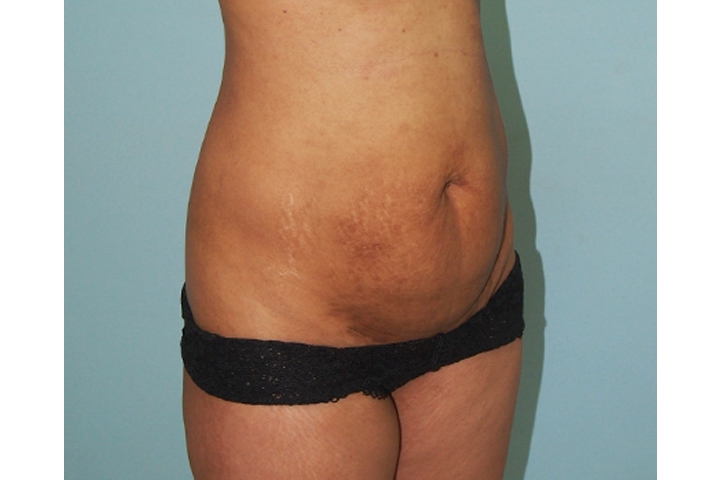
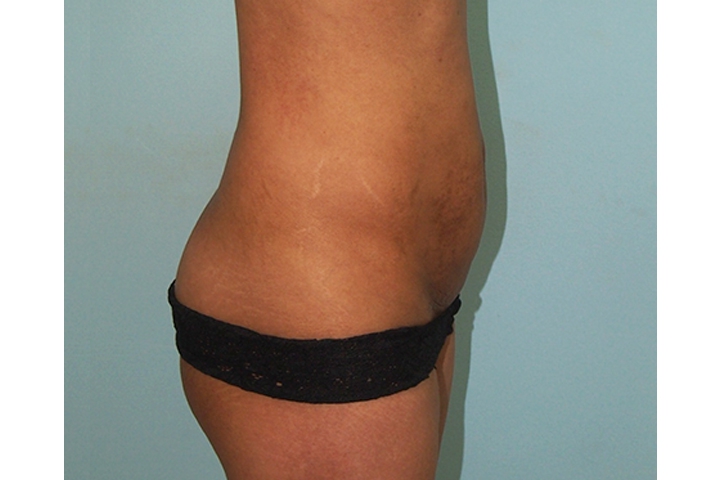
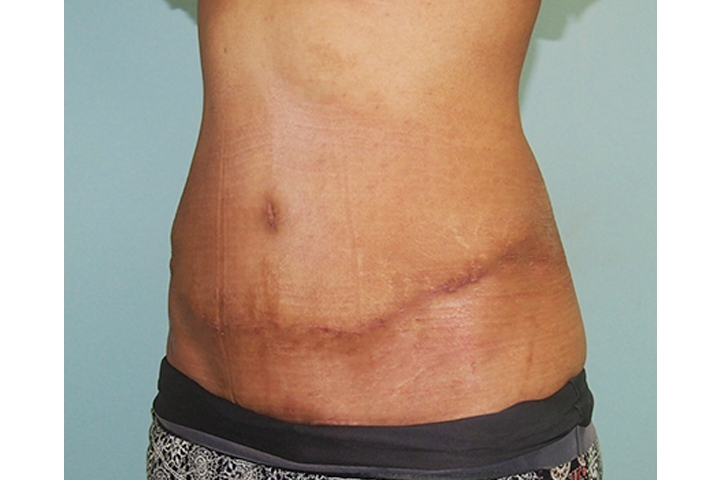
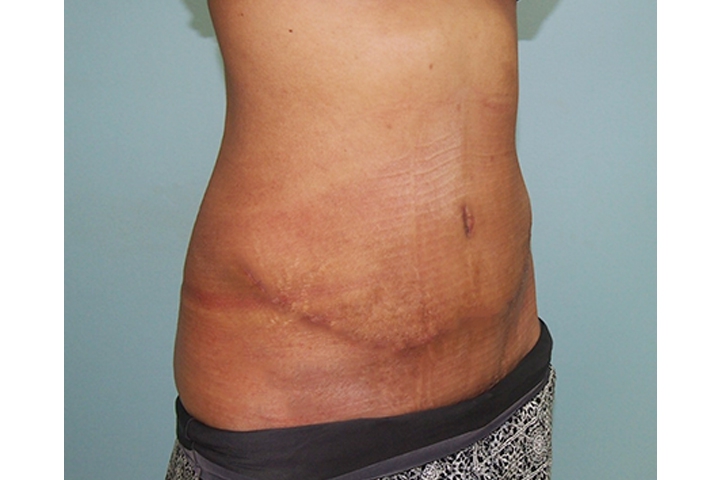
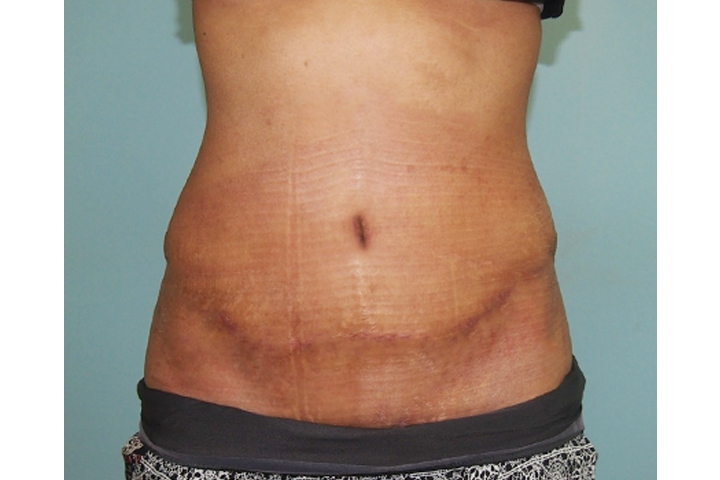
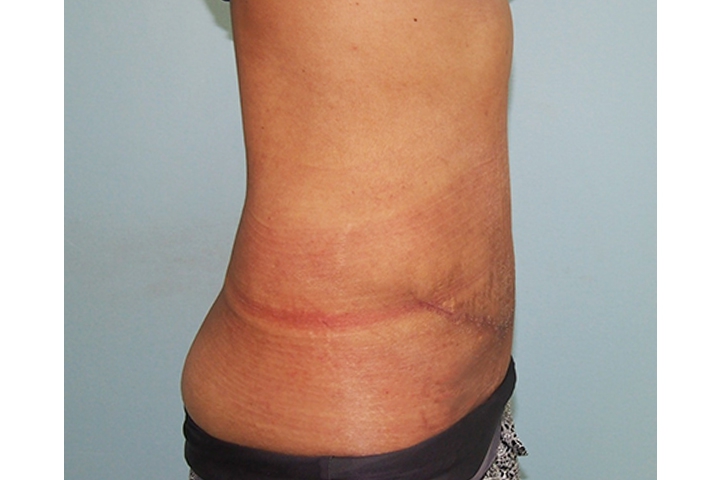
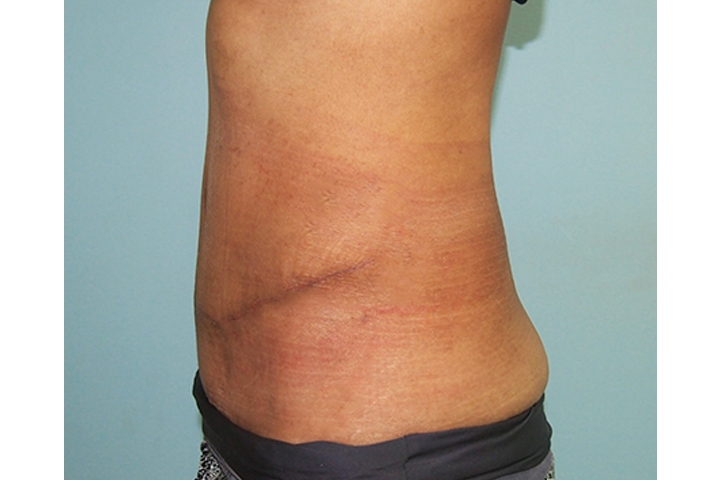
How long does it take for Tummy Tuck scars to go away?
The recovery time for a tummy tuck can vary depending on the individual and the extent of the surgery. Typically, the initial healing process can take several weeks. Generally, it can take several months for the incision lines to fully heal and for the scars to fade. However, the final appearance of the wounds can take up to a year or more. Additionally, after the surgery, it’s important to follow the care instructions provided by your surgeon to ensure proper healing and to minimize the visibility of scars.
What are the steps to follow to treat Tummy Tuck scars?
The best way to treat tummy tuck scars is to follow the care instructions provided by your surgeon. Here are a few general steps that may be recommended:
- Keep the incision clean and dry: Your surgeon will give instructions on how to care for it, which may involve cleaning it with an antiseptic solution and keeping it covered with a bandage for the first few days.
- Avoid strenuous activities: You’ll need to avoid strenuous activities that can cause strain on the abdominal area, such as heavy lifting or intense exercise, for several weeks after surgery.
- Wear compression garments: Your surgeon may recommend wearing a compression garment or elastic bandage to help support the abdominal area and reduce swelling.
- Massage the scars: After the incision has healed, your surgeon may recommend that you massage the wounds to help soften and flatten them.
- Avoid sun exposure: It is important to protect scars from the sun to prevent darkening or hyperpigmentation
- Use topical treatments: Your surgeon may recommend using topical treatments such as silicone gel or scar cream to help improve the appearance of the scars.
It’s important to note that scarring is a natural part of the healing process, and not all scars can be completely eliminated. However, following these steps can help minimize the scars’ visibility and promote healing.
How can Tummy Tuck scars be prevented, and how can they be controlled?
While it is impossible to completely prevent scars from forming after a tummy tuck, you can take steps to minimize their appearance and help them heal well.
- Choose a qualified surgeon: Selecting a skilled and experienced plastic surgeon can help minimize the risk of complications and ensure that the incision is made in a way that minimizes scarring.
- Follow post-operative instructions: Following your surgeon’s post-operative instructions carefully, such as keeping the incision clean and dry, avoiding strenuous activities, and wearing compression garments as advised, can help to minimize the risk of complications and promote healing.
- Avoid sun exposure: It is important to protect the scars from the sun to prevent darkening or hyperpigmentation.
- Massage the scars: After the incision has healed, your surgeon may recommend that you massage the wounds to help soften and flatten them.
- Use topical treatments: Your surgeon may recommend using topical treatments such as silicone gel or scar cream to help improve the appearance of the scars.
Frequently Asked Questions (FAQs)
What is a tummy tuck?
A tummy tuck, also commonly referred to as abdominoplasty, is a cosmetic surgical procedure designed to flatten the abdomen and create a smoother, firmer contour. It achieves this by removing excess skin and fat from the abdomen and tightening the underlying abdominal muscles.
abdominoplasty is a popular option for individuals who have experienced significant weight loss, pregnancy, or aging, which can leave them with an excess of loose skin, stretch marks, and weakened abdominal muscles.
What are the benefits of a tummy tuck?
Abdominoplasty offers numerous noteworthy benefits, including:
- Flatter abdomen: Achieve a smoother, more toned abdominal profile.
- Improved body contour: Create a more proportionate and balanced figure.
- Removal of excess skin: Eliminate any loose, sagging skin that is resistant to diet and exercise.
- Tightened abdominal muscles: Strengthen weakened abdominal muscles for improved core strength and posture.
- Reduced stretch marks: Minimize the appearance of stretch marks in the lower abdomen area.
- Enhanced self-confidence: Feel more comfortable and confident in your physical appearance.
Am I a suitable candidate for an abdominoplasty operation?
If the following apply to you, then you may be a solid candidate for surgery:
- You are in relatively good overall health.
- A non-smoker.
- Currently maintaining a stable weight
- You have realistic expectations about the outcome of the procedure.
- You have significant excess skin or laxity in the abdominal area.
We would strongly advise that you schedule a consultation with a qualified plastic surgeon before making any final decisions. Our team at Kamol Cosmetic Hospital will assess your individual needs, discuss your cosmetic goals, and decide if the procedure is the safest and most appropriate option for you.
What are the different types of abdominoplasty procedures?
There are several types of abdominal plastic surgery to choose from, including:
- Full tummy tuck: This is the most comprehensive procedure, involving an incision across the lower abdomen and around the navel. It addresses excess skin and fat in the entire abdominal area.
- Mini tummy tuck: This involves a smaller incision and is suitable for individuals with less excess skin and fat, primarily located below the navel.
- Extended tummy tuck: This extends beyond the traditional procedure, addressing excess skin and fat in the hips and flanks (aka “love handles”) as well.
During your consultation, your surgeon will recommend the most appropriate procedure based on your individual needs and the extent of correction required.
What can I expect during an abdominoplasty procedure?
First of all, the procedure is typically performed under general anesthesia. During the procedure, the surgeon will then:
- Make the necessary incisions based on the type of operation you have opted for.
- Remove excess skin and fat from the abdomen area.
- Tighten the underlying abdominal muscles.
- Reposition the navel (if necessary).
- Close the incisions with sutures or surgical tape.
- The whole procedure usually takes several hours to complete.